Article takeaways:
- Channel consolidation limits innovation: M&A activity makes it harder for emerging vendors to gain attention and become partner-ready, as traditional distributors prioritize known, easy-to-transact solutions over new and complex offerings.
- Emerging vendors need tailored support: Many innovative cybersecurity companies are considered early-stage and have limited resources.
- Orchestration over distribution: Connecting vendor intent with partner execution across marketing, validation, deal support, and lifecycle management simplifies the selling and delivery of solutions.
- Solution providers deserve more: In today’s threat environment, slow, one-off enablement is insufficient; orchestrated partnerships are critical to rapidly deploy innovative cybersecurity solutions with demand and technical validation in place.
Channel consolidation has improved reach and purchasing power, but it has also made it harder for high-potential emerging vendors to get the attention and hands-on support needed to become truly partner-ready. When supply partners manage hundreds (or thousands) of lines, the default operating model rewards what is already known and easy to transact – not what is new, differentiated, or operationally complex.
That creates a familiar pattern: Innovative solutions take too long to become sellable, sellers burn cycles on one-off enablement, and customers wait while threats keep moving. Consolidation in distribution makes it harder for high-potential startups to get the attention and support needed to gain adoption and scale. With AI and nation-state-sponsored cybercriminals driving threat levels to record levels, neither solution providers nor their business clients can afford to waste precious time waiting for next-generation cybersecurity offerings to be channel-optimized to simplify procurement, delivery, and support. The risks are simply too great to accept the traditional slow-but-steady approach to indirect market innovation.
Today’s cybersecurity-minded solution providers need (and deserve) a faster, more proactive way to bring next-generation protection to the SMB. The white hats simply cannot combat cybercriminals armed with AI and the latest tactics designed to infiltrate today’s cloud-enabled business systems without the most advanced tools, skills, and quality partnerships.
Obtaining those resources is especially challenging in a tech environment driven by mergers and acquisitions. Many security-minded solution providers are looking to innovative vendors to gain an upper hand in the data protection battle and often push those companies to build “channel-enabling” programs and offerings to best support their business practices and clients. The challenge is that many of these visionary organizations are in the early stages of development, with relatively few resources and limited cash flow. Creating a channel operation that effectively supports the cybersecurity-focused solution provider community is a heavy lift. Newcomers must nurture and scale their sales and support operations to meet the differing demands of potential partners and end-customers, which requires allocating their limited resources to create the smoothest and fastest path to success.
That’s why many vendors seek distribution partners to cost-effectively ramp up awareness and sales, minimizing their investment and the time needed to bring new offerings to the IT marketplace.
The line card trap: Why size hurts security startups
The strengths of the traditional IT distribution model can be a detriment to those same innovators. While the huge global distributors have what appear to be endlessly long line cards, vendors that are first to market in a category or those with hefty marketing budgets typically get most of the attention. That setup works to the advantage of legacy players with high brand equity, but it creates significant hurdles for suppliers of new innovations that could truly strengthen network and data protection for channel partners and their customers.
Visionary vendors deserve a clearer path to channel success. This is especially true for developers of advanced cybersecurity technologies and methodologies that give solution providers a proactive defensive edge in today’s threat environment. The channel embraces companies that deliver highly creative offerings, including those that provide more robust layers of protection.
Those emerging vendors deserve true supply chain partners, not traditional distribution alliances that place the newest entrants at the bottom of the line card. Today’s cybersecurity innovators should work with a true orchestrator that can quickly align their objectives with the right channel audience and optimize outcomes for everyone (including solution providers’ end-user communities). What these emerging vendors truly need is an incubation and growth engine to accelerate market readiness, scale sales and operations, and expand revenue opportunities.
Shifting the paradigm from distribution to orchestration
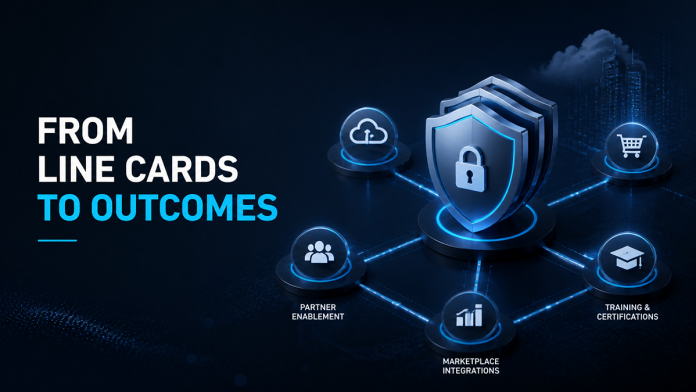
Orchestration is a true differentiator in the distribution realm, shifting the channel discussion from “here’s a new vendor” to “this is a motion your team can execute next week.” It connects vendor intent to partner execution across marketing, technical validation, cloud marketplaces, deal support, and lifecycle management – making a solution easier to explain, sell, and deliver consistently.
For example, Exclusive Networks recently introduced the Ignition growth incubator in North America, which provides an accelerated entry point for cybersecurity innovators and offers stronger profitability options for partners. This orchestration helps ensure new solutions are market-ready (positioning, packaging, competitive context), partner-ready (onboarding, training paths, sales plays, presales support), and operations-ready (clean quoting, procurement, renewals, and support). Marketplace and hyperscaler alignment should also be part of that equation – with distributors coordinating demand and co-selling motions that generate qualified conversations, not just impressions.
The new baseline: What MSPs must demand from supply chains
Access to a line card should not be the basis for distribution alliances today. Solution providers should expect their key supply chain partners to offer a repeatable onboarding process for new vendors – clear training, demo access, sales plays, and an easy presales escalation path – backed by validated integrations and reference architectures that reduce implementation risk.
That level of orchestration should extend beyond procurement. Lifecycle support for renewals and escalations, outcome-based demand generation with partner-ready assets, commercial flexibility (including marketplace transactions when relevant), and operational transparency through defined SLAs should be baseline expectations, along with deal rules and predictable quoting and procurement flows.
In a threat environment where time-to-protection is a competitive advantage, the channel can no longer rely on slow, one-off enablement programs for new cybersecurity offerings. Solution providers should expect supply partners to orchestrate – not merely distribute – so the most innovative new solutions arrive with demand, technical validation, commercial structure, and operational readiness already in place. Now is the time to seek true partners who understand today’s challenges and have adapted their programs and business models to meet those needs. Look closely at your distribution stack today: If they’re merely passing along a SKU rather than orchestrating an execution-ready security motion, it may be time to rethink the alliance.