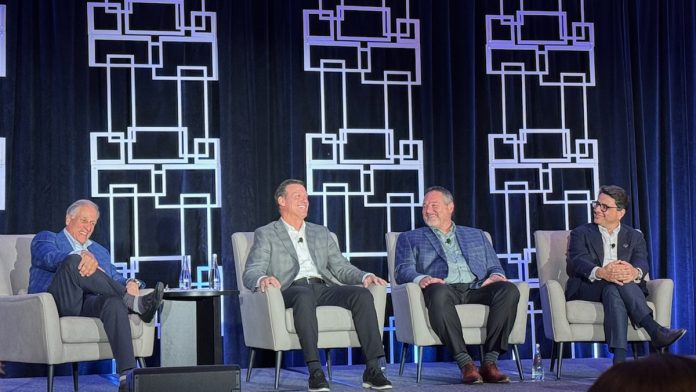
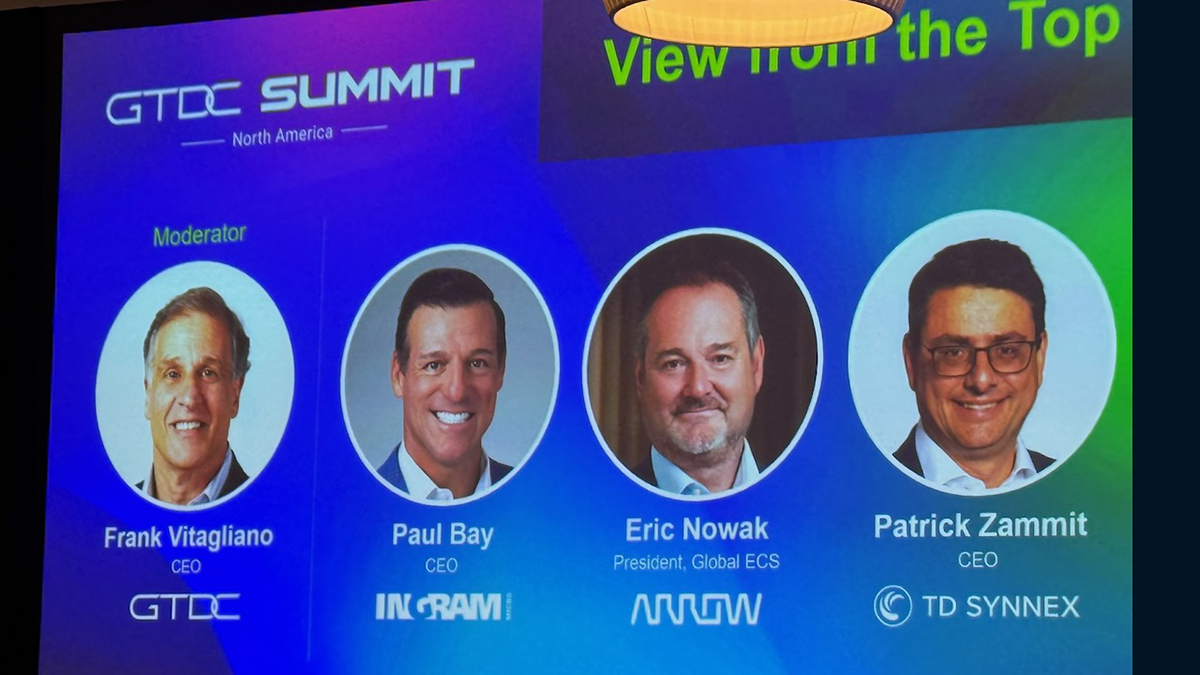
The technology landscape is shifting more rapidly than ever, and the recent GTDC Summit provided a front-row seat to how the world’s largest distributors are navigating this complexity. During the event, I sat in on a powerhouse “View from the Top” panel featuring Paul Bay (CEO, Ingram Micro), Eric Nowak (President, Global ECS, Arrow), and Patrick Zammit (CEO, TD SYNNEX). Following that discussion, I had the opportunity to sit down for a private one-on-one interview with Paul Bay to dig deeper into the specific roadmaps ahead.
Together, these conversations revealed a distribution model that has moved far beyond logistics to become master orchestrators of the modern channel.
A three-phase roadmap for AI adoption
One of the most pressing topics for MSPs today is moving beyond the AI hype to deliver actual business value. During our interview, Paul Bay shared a specific three-phase playbook that Ingram Micro is using to help partners navigate this transition:
- Assessment: Focus on the business outcome first, not the technology. Ask your clients: “What are you trying to solve for?”
- Evaluation: Determine if the solution is feasible, repeatable, or a one-time deployment.
- Delivery: Execute the implementation to achieve the defined business outcome.
Bay noted that many MSPs get caught up in buzzwords, but the real opportunity lies in identifying specific vertical needs and utilizing programs like Ingram Micro’s “Enable AI” to build technical skill sets.
 The shifting role of hyperscalers
 The shifting role of hyperscalers
While some predicted years ago that hyperscalers would eliminate the need for traditional distributors, the reality has been quite the opposite. The panel highlighted that hyperscalers have become critical partners in a hybrid go-to-market strategy. For MSPs, the distributor’s role is to act as a bridge – helping you manage complex hyperscaler relationships while ensuring you remain at the center of the customer relationship and own the primary contract.
As Eric Nowak of Arrow noted during the panel, the core mission of distribution hasn’t changed, even as the technology has: “The mission hasn’t changed. We are still here to help our partners navigate the complexity of the technology and the market.”
From shock absorbers to digital platforms
Patrick Zammit described the role of distribution as a shock absorber for the supply chain, helping partners navigate global conflicts, economic shifts, and rapid technology changes. To make this orchestration more efficient, the “Big Three” are investing heavily in digital platforms.
These platforms aren’t just for ordering; they’re evolving into sophisticated ecosystems. Paul Bay emphasized that Ingram Micro’s platform approach – backed by a massive $600 million investment – integrates AI and data mesh architectures to make it easier for MSPs to operate at speed and scale. The goal is to provide the “invisible shelf” of cloud and software services that modern IT environments require.
Challenge your distribution partners
The message from the top is clear: the most successful MSPs in 2026 and beyond will be those that challenge their distribution partners. Don’t just look to them for products; look to them for the roadmaps, technical resources, and platform capabilities that will enable you to move upstream. As the industry continues to transform, these master orchestrators are ready to help you lead the way.